|
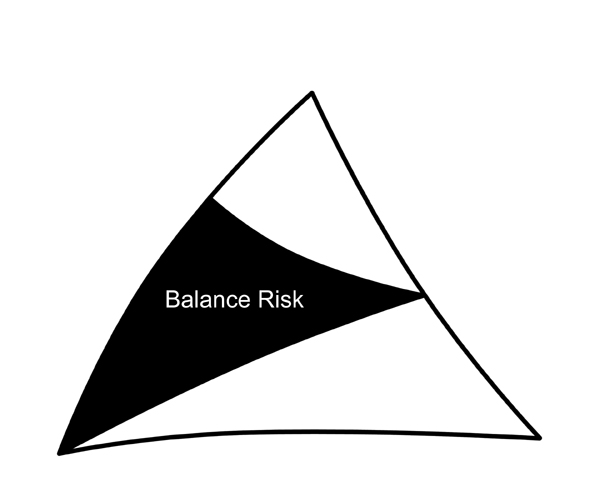
Balancing Risk
There are many
reasons why people employ the services of a guide. The main
reason though is to balance risk: people don’t want to
come back from an adventure broken, their ego crushed or
their time wasted. An adventure is an experience that
involves risk and ends successfully. This risk can be real
or perceived. Adventures involve an element of risk, the
guides job is to balance that risk to make sure it is not
too much or too little. Eliminating all risk turns an
adventure into an experience while the presence of too much
risk can lead to misadventure. One of the primary roles of a
guide is to be a risk manager.
There are six
components to balancing risk; accept, assess, reduce,
respond, recover and reflection.
Accept:
Accepting risk includes signing a waiver,
acknowledging there is potentially for danger, and
understanding what an activity entails. This process
involves the participant, the organization and the guide. It
usually includes literature, discussion and documentation.
Assess:
Assessing risk is an ongoing process. Environmental
conditions, the nature of the terrain and the condition of
the participants are weighted against the potential for
harm. There is risk in every activity. Great adventures are
built on exposing people to the right amount of risk, the
key is to know where the line is between too much and not
enough risk. The line between adventure and misadventure is
often crossed when a guide fails to properly assess changing
conditions and participant needs.
Reduce:
Once you understand how much risk is enough a guide may need
to take steps to reduce it. This is done through
preparation, planning, group management, skill development,
client care and decision making. This is what the bulk of
guiding entails.
Respond:
Eventually things will go wrong despite a guide’s best
efforts. How a guide responds to a crisis will
determine whether it becomes a part of the adventure or a
disaster. Small problems are usually common and easy to deal
with. It’s the big ones that test whether a guide can
solve problems quickly while staying cool under pressure.
Recover:
After the dust has settled and the situation has been dealt
with the guide’s task is to move into recovery mode. This
could also be thought of as damage control. Relationships
may need to be salvaged by reaching out to participants and
talking through happened. This may involve an informal pep
talk or a more formal debriefing. Legal protections may need
to be considered, this may be done through the documentation
of events. The guide’s mental health may need to be
protected by sitting down with others and going through what
happened.
Reflect:
When everything has been dealt with there will come a time
to reflect on how things were run. What could have been done
better? Given the same circumstances again would the same
decision have been made? Were the policies and procedures
that were in place to deal with risk adequate?
The challenge
can be that there is no real way to know how a person will
handle a crisis unless they have experienced it. Studies
have shown that in a serious incident twenty percent of
people will rise to the challenge and become leaders. Sixty
percent of people will become followers and the other twenty
will fall apart. Unless you have experienced a real crisis
there is no way to know where you will fall. We would all
like to think we would rise to the occasion and take charge
but there is no way to know for sure.
Preparing,
planning and practice are the best ways to get ready for
when things are going to inevitably go wrong.
The line between
adventure and misadventure can be very fine. On one hand you
want your people to be challenged so they feel they have
achieved something. On the other hand you don’t want to go
too far and leave them feeling mentally defeated or worse,
physically damaged. Broken people are usually not happy
people.
|